Knitted Mesh Gaskets
Product Profile — EMI/RFI/EMP Shielding & Sealing Components
Shielding & Sealing Solutions for Demanding Applications
1. Product Overview
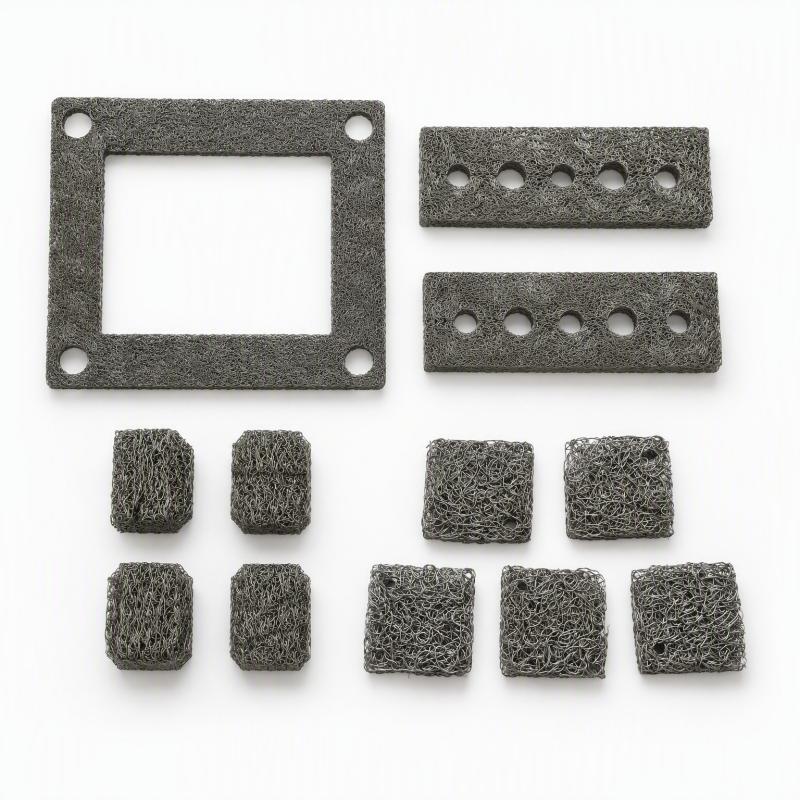
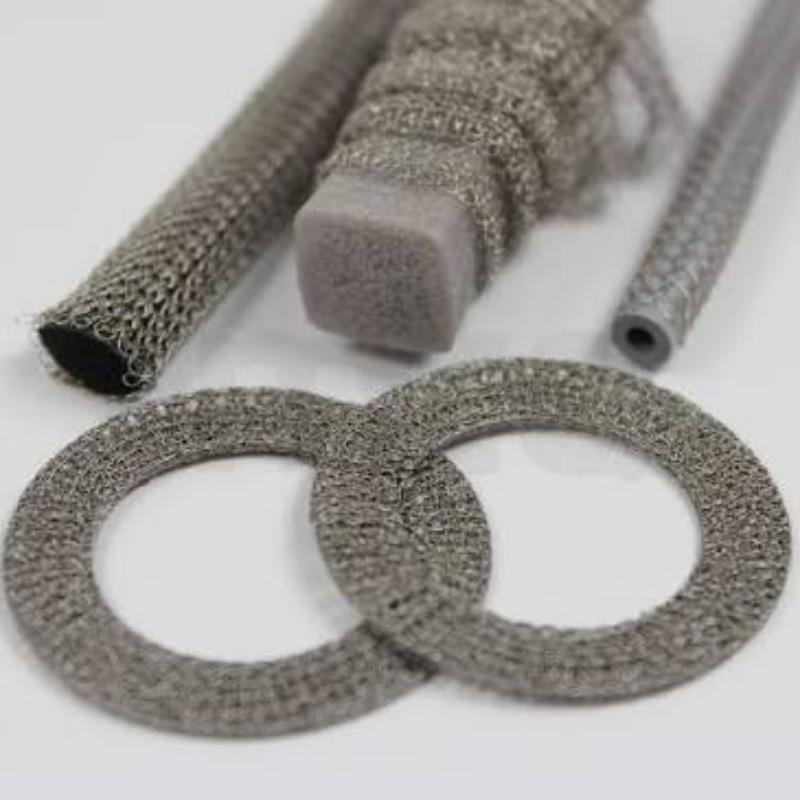
Knitted mesh gaskets (also known as knitted wire mesh gaskets) are EMI/RFI shielding and sealing components manufactured by continuously knitting fine metal wire into a mono-filament interlocking loop structure. The interlocking loops give the gasket high strength and resilience while allowing it to conform to almost any size or shape. Solid all-metal gaskets, compressed profiles, and gaskets knitted over elastomer cores are available. They provide a cost-effective, high-performance shielding solution between two metallic surfaces in electrical and magnetic fields, covering EMI, RFI and EMP applications.
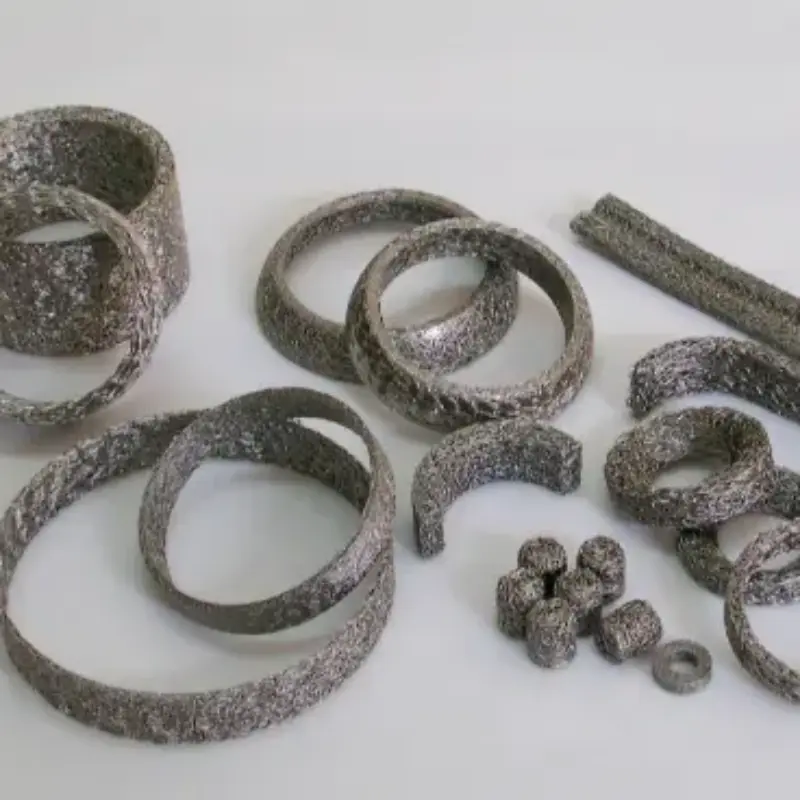
The product family covers two main categories: electromagnetic shielding gaskets (EMI/RFI) and compressed knitted mesh gaskets for high-temperature mechanical and thermal sealing duties, such as exhaust seal rings and gland seals.
2. Construction & Structure
● Mono-filament interlocking loop construction — high strength, flexible, conforms to almost any size or shape
● Optional elastomer core (neoprene/silicone sponge or silicone tubing) to aid compression and reduce compression force
● Available solid or hollow, multi-stranded, multi-layered and crimped
● Continuous knitted strips from 0.062″ to 30″ wide, or cut-to-size gaskets
● Standard cross sections: Round, Rectangular, Single Fin, Double Round
3. Materials
Any ductile material that can be drawn into wire can be knitted. Typical wire diameters range from 0.0035″ to 0.011″ (0.089–0.28 mm); compressed gaskets commonly use 0.11–0.13 mm wire. Special diameters are available on request.
| Material |
Description |
Typical Use |
| Monel |
Nickel-copper alloy with good electrical performance and excellent corrosion resistance |
High-performance shielding, harsh environments |
| Tin-plated Copper-clad Steel (SnCuFe) |
1005-1010 steel wire with copper outer cladding and tin-plated exterior; excellent electrical properties and broadband attenuation |
Best shielding performance, most widely used in industry |
| Aluminum 5056 |
Lightweight with good electrical performance; useful where galvanic corrosion is a concern |
Lightweight equipment, dissimilar-metal matching |
| Stainless Steel (304) |
Good electrical performance, high strength, corrosion resistant |
General-purpose shielding and sealing |
| Nickel |
High temperature and corrosion resistance |
High-temperature and corrosive environments |
| Brass |
Good conductivity at moderate cost |
General shielding applications |
4. Key Features & Benefits
● Excellent EMI/RFI/EMP shielding performance (high attenuation)
● Compressible with a high degree of resilience — spring-like recovery
● Extreme temperature range and suitability for harsh environments (corrosion, vibration)
● Good galvanic match with mating flanges, minimizing corrosion between gasket and flange
● Wide choice of materials, wire diameters, mesh densities and profiles
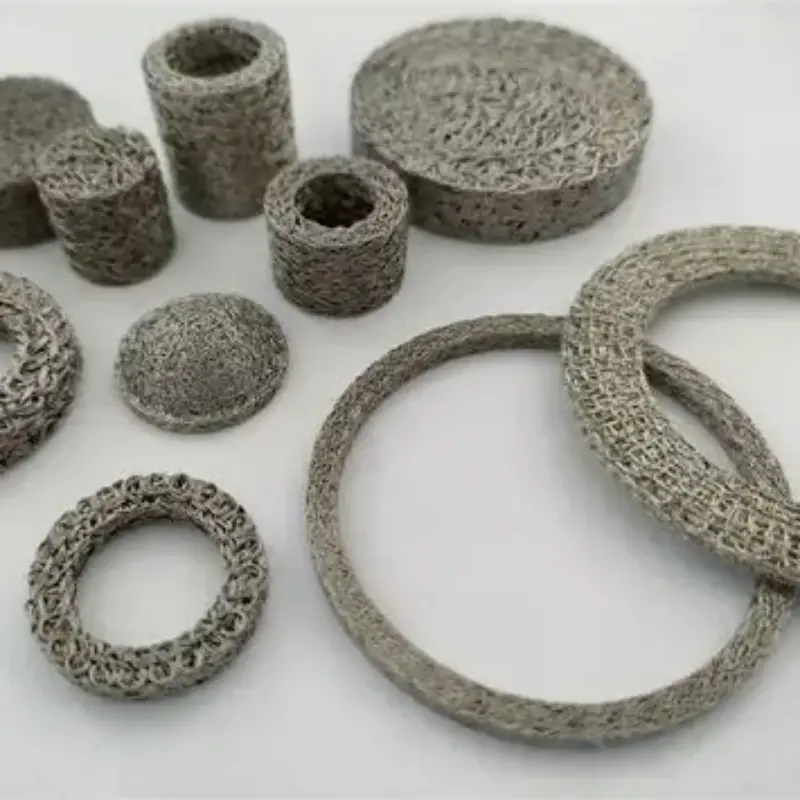
● Custom shapes, sizes and densities available (ring, strip, rectangular, circular, etc.)
● Ease of installation and field replacement; cost-effective
● Multiple layers / elastomer cores reduce compression loading and improve sealing
5. Technical Specifications
| Parameter |
Typical Value |
| Wire diameter |
0.0035″–0.011″ (0.089–0.28 mm); compressed gaskets commonly 0.11–0.13 mm; special sizes on request |
| Continuous width |
0.062″–30″ (1.6–762 mm) |
| Standard cross-section (H × W) |
0.062″ × 0.062″ up to 0.250″ × 1.25″ |
| Temperature range |
All-metal type: determined by material (stainless steel/Monel withstand high temperatures); with elastomer core: typically -50 °C to +200 °C (silicone cores can be higher) |
| Shielding type |
EMI / RFI / EMP (magnetic and electric fields) |
| Corrosion resistance |
Good to excellent, depending on material |
| Water sealing |
Not water-tight; provides limited dust sealing |
| Compression set |
Solid all-metal mesh exhibits compression set — not recommended for frequent panel opening; elastomer core improves recovery |
| Mounting |
Mechanical fasteners, press-fit into groove/return flange, conductive adhesive bonding |
Note: Shielding attenuation values (dB) depend on material, wire diameter, mesh density and test frequency; verify with samples for specific applications.
6. Standard Cross Sections
| All Mesh Round |
All Mesh Rectangular |
Single Fin |
Double Round |
| Solid knitted round profile for general installation |
Solid knitted rectangular profile for rectangular grooves |
Profile with a single fin, used with retention bar / compression stop |
Double round profile for enhanced contact and sealing |
Cross sections are combinable with all standard materials and optional elastomer cores.
7. Standard Sizes — Data Sheet
Standard strip dimensions (height × width, inches). Non-standard sizes, materials and combinations are available on request.
| Height (in) |
Available Width (in) |
| 0.062 |
0.062, 0.125, 0.187, 0.250, 0.312, 0.375, 0.500, 0.625, 0.750 |
| 0.093 |
0.093, 0.125, 0.187, 0.250, 0.312, 0.375, 0.500, 0.625, 0.750 |
| 0.125 |
0.125, 0.156, 0.187, 0.250, 0.312, 0.375, 0.500, 0.625, 0.750 |
| 0.156 |
0.156, 0.250, 0.312, 0.375, 0.500, 0.750, 1.00 |
| 0.187 |
0.187, 0.250, 0.312, 0.375, 0.500, 0.750, 1.00 |
| 0.250 |
0.250, 0.312, 0.375, 0.500, 0.750, 1.00, 1.25 |
Compressed gasket shapes: ring, circular, stripe, rectangular — or fully custom profiles.
8. Mounting & Installation
● Mechanical fasteners (screws, clips, retention bars)
● Press-fit into a groove or return flange on sheet-metal enclosures
● Bonded in place with conductive adhesive
● Single-fin gasket with retention bar / compression stop
● Round strip between tongue and groove
9. Design Considerations
● Cut ends may show loose wires — dip in glue, spot weld, or sew the cut end
● Sufficient compression force is required for good metal-to-metal contact
● Choose wire type for galvanic compatibility with mating metalwork
● Not water-tight; offers limited dust sealing
● Solid all-metal mesh suffers compression set — avoid frequent panel opening; use elastomer core where needed
10. Applications
| Industry |
Typical Applications |
| Electronics & Telecom |
Enclosure lid and door gaskets, removable cover plates, EMI vent panels and shielded window interfaces, connector gaskets |
| Appliances |
Microwave oven door seals (EMI shielding) |
| Industrial Equipment |
Magnetron seals, gland rings, grounding buttons |
| Aerospace & Defense |
Radar, avionics, military electronic enclosures, aircraft/missile electronics bays |
| Automotive |
Electronic control units (ECU), sensor and e-drive system shielding, exhaust seal rings |
| Security & Surveillance |
CCTV cameras, waveguide seals |
| Energy & Power |
Inverters, converters, energy storage system shielding |
| Medical Equipment |
EMC shielding for infusion pumps, patient monitors and other medical devices |
11. Customization & Ordering
● Materials: stainless steel, Monel, aluminum, tin-plated copper-clad steel, nickel, brass, etc.
● Dimensions: continuous strips, cut-to-length gaskets, rings and custom profiles
● Wire diameter, mesh density, number of layers and crimping can be adjusted
● Elastomer cores to meet temperature range, compression set and compression force requirements
References: Metal Textiles (Metex) Knitted Wire Mesh Gaskets Data Sheet; TE Connectivity (Kemtron) Knitted Wire Mesh; Boegger Industech Compressed Knitted Mesh Gasket; RS Components product data.